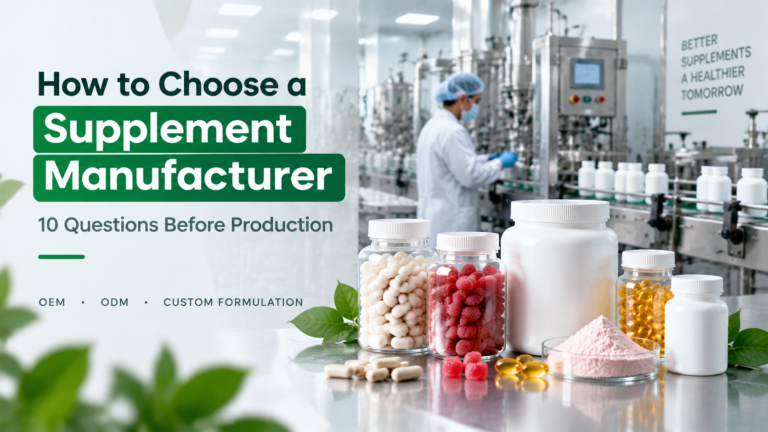
How to Choose a Reliable China Supplement Manufacturer
Target Audience: Cross-border e-commerce sellers, independent website owners, and brand owners in the dietary supplement industry.
1. Common Pitfalls When Sourcing from China Supplement Factories

Navigating the complex landscape of China supplement manufacturing presents significant challenges for international buyers. The most prevalent issues include:
Regulatory Non-Compliance
Many manufacturers operate without proper GMP (Good Manufacturing Practice) certification or FDA compliance documentation. This creates substantial risks for brands selling in regulated markets like the United States, European Union, and Australia.
Inconsistent Quality Standards
Quality fluctuations between production batches remain a persistent problem. Variations in raw material sourcing, manufacturing processes, and quality control protocols can lead to product inconsistencies that damage brand reputation and customer trust.
Unreliable Delivery Timelines
Manufacturers frequently overpromise on production capacity and delivery schedules. During peak seasons, delayed shipments can result in stockouts, missed sales opportunities, and platform performance penalties on e-commerce marketplaces.
Documentation Fraud
The prevalence of counterfeit FDA certificates, falsified GMP audit reports, and manipulated quality documentation creates significant compliance risks. Platforms like Amazon, eBay, and Shopify increasingly scrutinize supplier documentation during brand registration and product listing processes.
Inadequate After-Sales Support
Many manufacturers provide minimal post-production support, leaving brands to handle quality complaints, returns, and regulatory inquiries independently. This lack of comprehensive service infrastructure can strain resources and impact customer satisfaction metrics.
Critical Business Impacts: These challenges directly translate to platform account suspensions, failed product compliance audits, inventory shortages during peak sales periods, and diminished brand equity in competitive markets.
2. Seven Essential Selection Criteria for Supplement Manufacturers

1. GMP Facility Certification
Verify current GMP certification from recognized international bodies (US FDA, NSF, TGA, or equivalent). The certification should cover the specific supplement categories you intend to manufacture (capsules, tablets, powders, softgels).
2. FDA Regulatory Compliance Capability
Assess the manufacturer’s experience with FDA regulations including DSHEA compliance, New Dietary Ingredient (NDI) notifications, and adverse event reporting systems. Ensure they maintain proper documentation for FDA inspections and market entry requirements.
3. Authentic Production Capacity and Lead Times
Evaluate actual production capabilities rather than claimed maximums. Critical metrics include monthly output capacity for your specific product formats, standard lead times for production runs, and scalability during peak demand periods.
4. Comprehensive Quality Control Systems
Examine the full quality control pipeline from raw material testing (heavy metals, microbial contamination, identity verification) to finished product analysis (potency, dissolution, stability). Third-party laboratory partnerships and in-house testing capabilities are essential indicators.
5. Global Logistics and Fulfillment Infrastructure
Assess international shipping capabilities including temperature-controlled logistics for sensitive ingredients, customs documentation expertise, and established relationships with global freight forwarders. Overseas warehouse partnerships indicate advanced supply chain maturity.
6. Custom Formulation and Product Development Expertise
Evaluate R&D capabilities including formulation scientists, regulatory expertise for label claims, and experience with various delivery systems (time-release, enteric coating, bioavailability enhancement technologies).
7. Complete Certification Portfolio
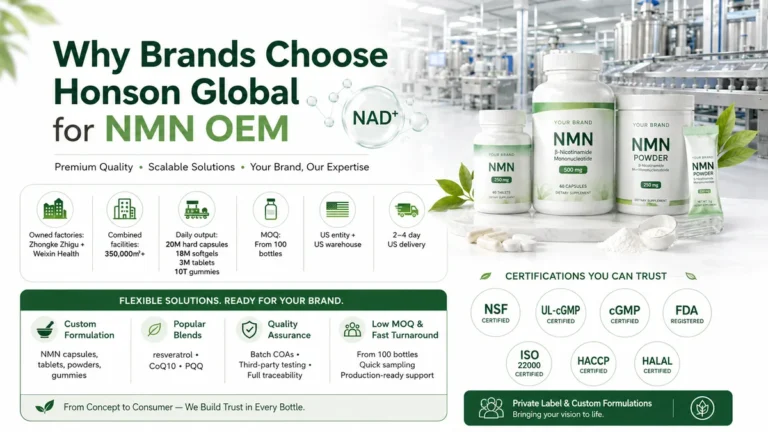
Verify all relevant certifications: ISO 9001 (quality management), ISO 22000 (food safety), HACCP, Halal, Kosher, Organic (where applicable), and specific market certifications (Health Canada NPN, EU Novel Food).
3. Five Practical Verification Methods

I. Comprehensive Factory Audits (Virtual and Physical)
Virtual Audit Protocol: Request live video tours of production areas, quality control laboratories, and warehouse facilities. Document equipment conditions, cleanliness standards, and staff PPE compliance. Review batch records and quality documentation during the virtual session.
Physical Audit Checklist: When conducting on-site visits, verify GMP compliance through environmental monitoring data, water system validation records, equipment calibration logs, and employee training documentation. Assess raw material storage conditions and finished goods handling procedures.
II. Certification Authentication Procedures
Validate all certifications through official channels:
- FDA Establishment Registration: Verify via FDA’s public database using the registration number
- GMP Certificates: Contact the issuing certification body directly
- Third-Party Audits: Request unredacted audit reports from SQF, BRC, or equivalent schemes
- Patent and Trademark Verification: Confirm ownership of claimed proprietary technologies
III. Systematic Sample Testing Protocol
Implement a three-tier testing approach:
- Initial Evaluation Samples: Basic identity and potency verification
- Pre-Production Samples: Full specification testing including heavy metals, microbiology, and dissolution
- Production Batch Samples: Random sampling from actual production runs for comprehensive analysis
Utilize accredited third-party laboratories for independent verification of all test results.
IV. Contractual Safeguards for Delivery and Support
Negotiate clear contractual terms including:
- Penalty clauses for delayed shipments
- Quality guarantee periods with defined remediation processes
- Documentation requirements for each shipment (certificates of analysis, manufacturing records)
- Escalation procedures for quality issues and regulatory inquiries
V. Risk Mitigation Strategies
Avoid common sourcing mistakes by:
- Diversifying suppliers for critical ingredients
- Maintaining safety stock levels based on realistic lead times
- Implementing regular quality audits throughout the partnership
- Developing contingency plans for supply chain disruptions
4. Case Study: Premium Supplement Brand’s Manufacturing Journey

Background: Wellness Pro Supplements
A US-based supplement brand targeting the premium sports nutrition market experienced significant challenges with their initial Chinese manufacturer. Despite promising initial samples, production inconsistencies led to customer complaints about potency variations. During their peak Q4 season, delayed shipments resulted in 35% stockouts across their Amazon FBA inventory.
Initial Challenges
The original manufacturer presented GMP certification that later proved to be expired. FDA documentation was incomplete, causing Amazon to temporarily suspend several product listings for compliance verification. Quality control failures resulted in a product recall that damaged brand reputation and incurred substantial financial losses.
Strategic Partnership Transition
After implementing rigorous supplier evaluation protocols, Wellness Pro identified Honson Global as their manufacturing partner. The selection criteria focused on three core pillars:
Regulatory Compliance: Honson Global provided current FDA establishment registration, valid GMP certification from an internationally recognized body, and comprehensive documentation for all regulatory requirements.
Production Stability: The manufacturer demonstrated consistent 45-day lead times throughout seasonal fluctuations, maintained 99.2% on-time delivery performance, and implemented robust quality control systems that reduced product variations to within 2% of specifications.
Supply Chain Reliability: Established overseas warehouse partnerships in the United States and European Union enabled faster market responsiveness, reduced shipping costs by 28%, and improved inventory management efficiency.
Business Outcomes
Within 12 months of the partnership transition:
- Amazon suspension incidents reduced by 100%
- Customer satisfaction scores improved from 3.8 to 4.7 stars
- Peak season stockouts eliminated completely
- Monthly sales volume increased by 67%
- Return rates decreased from 8.3% to 1.2%
Key Success Factors: The partnership succeeded through transparent communication, rigorous quality protocols, and shared commitment to regulatory compliance. The manufacturer’s expertise in FDA requirements and international market regulations proved instrumental in the brand’s expansion into new geographic markets.
5. Next Steps for Your Supplement Business

Partner with Honson Global for Your Supplement Manufacturing Needs
As demonstrated in our case study, selecting the right manufacturing partner transforms regulatory compliance from a burden into a competitive advantage. Honson Global combines extensive FDA compliance expertise with robust quality systems and reliable global logistics.
Our Value Proposition:
- Comprehensive Regulatory Support: Full documentation for FDA, Health Canada, EU, and Australian market requirements
- Quality Assurance: Multi-stage testing protocols with third-party laboratory verification
- Supply Chain Optimization: Strategic overseas warehouse partnerships for faster market access
- Custom Formulation: Expert R&D team for proprietary product development
Exclusive Offer for Readers:
Contact Honson Global today to receive:
- Free Custom Formulation Consultation: Discuss your product concepts with our R&D specialists
- Complimentary Quotation: Detailed pricing for your specific product requirements
- Virtual Factory Tour: Live demonstration of our GMP-certified facilities
- Regulatory Pathway Analysis: Assessment of your target market requirements
Take the Next Step: Visit honsonglobal.com or contact our business development team to schedule your initial consultation. Transform your supplement sourcing strategy from a operational challenge into a strategic advantage.
Keywords: China Supplement Manufacturer, GMP Supplement Factory, FDA Compliant Supplement Manufacturer, Dietary Supplement Manufacturing, Cross-border Supplement Supply Chain