The 5 Most Costly Compliance Mistakes Supplement Brands Make (And How to Avoid Them)

The Hidden Price of Getting Compliance Wrong
You launched your supplement brand. Products are selling. And then — FDA warning letter.
Or worse: a Prop 65 lawsuit. A mandatory recall. A customer hospitalized from heavy metal contamination.
Most supplement brands don’t think about compliance until it’s too late.
The cost of a compliance violation isn’t just the fine. It’s:
- Product seizures and forced recalls
- Legal fees that can run into hundreds of thousands of dollars
- Permanent reputational damage with your customers
- Amazon/retail bans if your account gets flagged
Here’s the 5 compliance mistakes we see supplement brands make — and how to avoid them.
Mistake 1: Relying on Manufacturer Claims Without Independent Verification
Many brands trust their manufacturer’s COA (Certificate of Analysis) at face value.
The problem: Some manufacturers use in-house labs, not third-party certified ones. In-house testing is like asking someone to grade their own exam.
What to do instead:
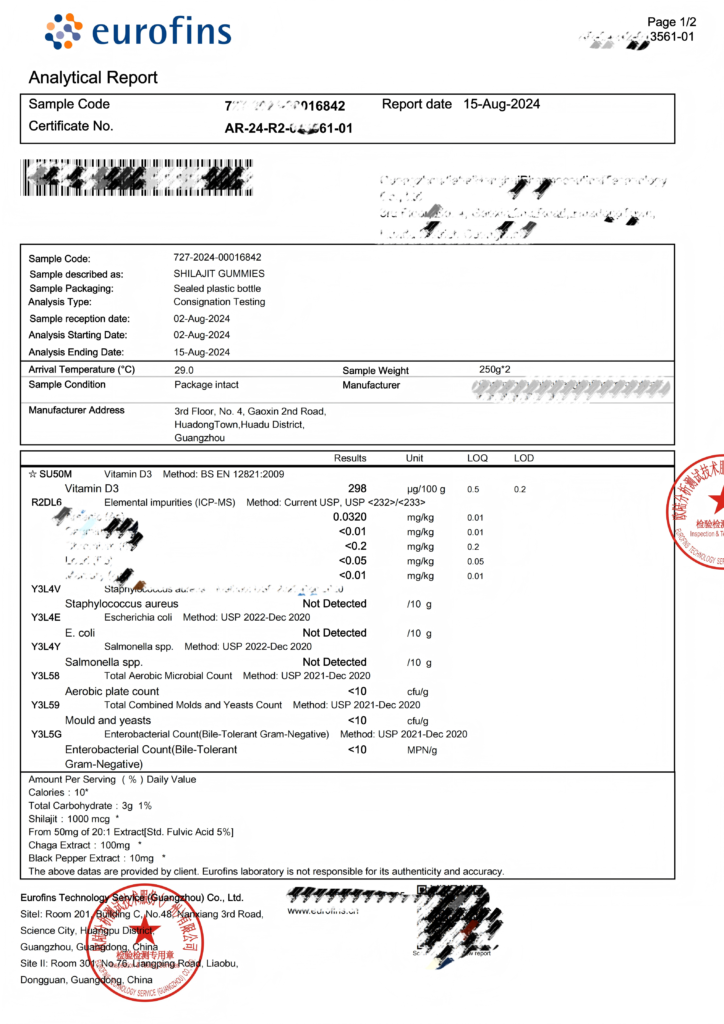
- Require third-party lab testing from an ISO 17025 accredited laboratory
- Pull batch-specific test results — not just product summaries
- Run your own periodic independent testing, especially for new batches
Mistake 2: Proprietary Blends That Don’t Match Label Claims
This is one of the most common — and most expensive — labeling violations.
If your label says 500mg of L-Theanine per serving but your formula only contains 200mg due to a proprietary blend disclosure, you are violating FDA labeling laws.
The FDA has issued warning letters specifically for this.
What to do instead:
- Verify every label claim against your actual formula
- Work with a manufacturer who provides full formula transparency
- Have a regulatory consultant review your labels before first production
Mistake 3: Skipping Third-Party Testing for Heavy Metals & Microbes
Heavy metals (lead, arsenic, cadmium, mercury) and microbial contamination (E. coli, salmonella, listeria) are non-negotiable testing requirements — not optional add-ons.
Contaminated supplements have caused real consumer harm. And brands have paid the price.
What to do instead:
- Make heavy metal and microbial testing standard for every batch
- Ask your manufacturer for actual test reports, not just COA statements
- Consider California’s Prop 65 limits even if you’re not selling in CA — they’re the strictest in the country
Mistake #4: Operating Without GMP Certification
Good Manufacturing Practice (GMP) certification means a facility follows FDA-mandated quality standards for identity, purity, strength, and composition.
Without GMP compliance, there’s no guarantee your product contains what the label says — in the amount stated.
What to do instead:
- Only work with FDA-registered facilities
- Ask for GMP certification documentation, not just facility registration
- Prefer manufacturers who hold multiple certifications (NSF, cGMP, ISO)
Mistake 5: Ignoring State-Specific Regulations (Especially Prop 65)
California’s Proposition 65 requires warnings for products containing chemicals known to cause cancer or reproductive harm — including lead, cadmium, and certain botanical extracts.
The limits are stricter than federal standards. And lawsuits are common.
We’ve seen brands with otherwise clean products get hit with Prop 65 lawsuits because they didn’t test to California’s standards.
What to do instead:
- Test to Prop 65 standards even if you’re not primarily selling in California
- Include Prop 65 warnings on labels if your product contains any flagged compounds
- Work with a manufacturer who understands state-by-state compliance requirements
The Real Cost of Getting It Wrong
| Violation Type | Potential Cost |
|---|---|
| FDA Warning Letter | $7,000 – $1,000,000+ per violation |
| Product Recall | $2M – $10M average total cost |
| Prop 65 Lawsuit | $2,500 – $25,000 per violation per consumer |
| Amazon Account Suspension | Lost revenue + reinstatement costs |
| Reputational Damage | Priceless |
Bottom Line
Compliance isn’t a box to check. It’s a competitive advantage.
Brands that get compliance right:
- Avoid costly recalls and lawsuits
- Build real trust with their customers
- Scale without regulatory roadblocks
Want to work with a manufacturer who takes compliance as seriously as you do? Connect with Honson Global today.