How to Read Supplement COA: Without a Science Degree
What Is a COA and Why Should You Care?
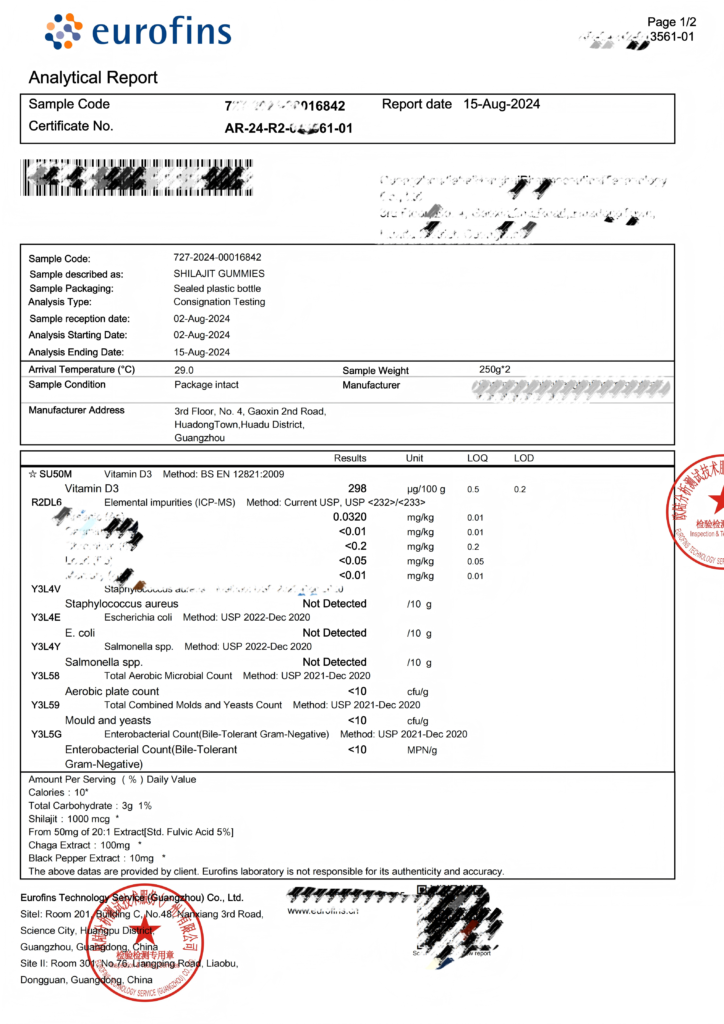
A Certificate of Analysis (COA) is a document issued by a third-party laboratory that verifies a supplement batch meets specifications. It’s not a sales pitch from your supplier — it’s an independent quality report.
If your supplier can’t produce one, that’s a red flag. If they can produce one but you don’t know how to read it, you might miss critical issues hiding in plain sight.
- What’s actually in the product (vs. what’s on the label)
- Whether it contains harmful contaminants
- That the potency matches what the manufacturer claims
- That the batch is safe to sell
The 5 Sections Every COA Must Have
1. Batch Information & Sample Details
Look for:
- Batch/Lot Number — Must match the label on your product
- Manufacturing Date & Expiry Date — Confirm shelf life
- Sample Received Date — Lab must receive sample within valid shelf life
- Test Date — When the actual analysis was performed
- Sample Quantity — Amount lab received for testing
Common mistake: Brands compare the wrong batch COA to the wrong product. Always verify batch numbers match before you do anything else.
2. Active Ingredient Potency / Assay Results
This is where you confirm your supplement actually contains what it claims.
Look for:
- Assay Method Used — e.g., HPLC, Titration, UV-Vis
- Declared Value — What the label says (e.g., “500mg Ashwagandha”)
- Actual Result — What the lab found
- Pass/Fail — Whether it meets spec (typically ±10–20% of declared value)
Example:
| Ingredient | Label Claim | Lab Result | Specification | Status |
|---|---|---|---|---|
| Vitamin C | 500mg | 485mg | 450–550mg | ✅ Pass |
| Zinc | 15mg | 10mg | 13.5–16.5mg | ❌ Fail |
If zinc came back at 10mg when you paid for 15mg, your customers are getting a subpotent product. That’s not just a quality issue — it’s a potential FTC/FDA violation.
3. Heavy Metals Testing
Required panels typically include:
- Lead (Pb) — Maximum 10 mcg/day
- Arsenic (As) — Maximum 10 mcg/day
- Cadmium (Cd) — Maximum 5 mcg/day
- Mercury (Hg) — Maximum 2 mcg/day
These are measured in mcg/g or ppm (parts per million). Know your limits. For a 1g/day supplement:
| Metal | Limit (ppm) | Why It Matters |
|---|---|---|
| Lead | ≤10 mcg/day | Neurotoxicity, banned in many states |
| Arsenic | ≤10 mcg/day | Carcinogenic |
| Cadmium | ≤5 mcg/day | Kidney damage |
| Mercury | ≤2 mcg/day | Neurological damage |
If your supplier’s COA shows no heavy metals testing at all — walk away.
4. Microbiological Testing
Required for most supplement forms:
- Total Aerobic Plate Count — Target: <10,000 CFU/g
- Total Yeast & Mold — Target: <100 CFU/g
- E. coli — Target: Negative / Not Detected
- Salmonella — Target: Negative / Not Detected
- Staphylococcus aureus — Target: Negative / Not Detected
These pathogens can make people sick. A clean COA from 2 years ago doesn’t protect you if the current batch was produced in different conditions.
5. Lab Accreditation — ISO 17025
This is the most overlooked section on most COAs.
ISO 17025 is the international standard for testing and calibration laboratories. A lab without this accreditation may not follow scientifically valid procedures.
Look for:
- Lab Name & Address
- Accreditation Body — e.g., A2LA, PJLA, ISOEAL
- Accreditation Number — Verify it on the accrediting body’s website
Good COA vs. Bad COA — Quick Comparison
| Checkpoint | ✅ Good COA | ❌ Bad COA |
|---|---|---|
| Testing Lab | ISO 17025 accredited, name and number provided | No lab info or in-house testing only |
| Batch Number | Matches your order exactly | Missing or doesn’t match |
| Heavy Metals | Full 4-metal panel with actual numbers | Missing or marked “for reference only” |
| Microbiology | Full pathogen panel | Total plate count only, no pathogens |
| Potency | Actual numerical results | Labeled “pass” with no numbers |
| Test Date | Recent, within shelf life | Outdated or missing |
| Signature | Lab director signature or stamp | No signature or stamp |
The Bottom Line
A COA is only as good as your ability to read it. You don’t need a chemistry degree — you need to know what to look for.
The brands that get burned are the ones who accept COAs at face value. The brands that build real trust with their customers take the time to understand what’s on that piece of paper.
Read every COA. Verify every lab. Question every gap.
Want Help Vetting Your Next Supplier?
If you’re evaluating manufacturers for your supplement brand and want a second set of eyes on their documentation, contact us and we’ll help you assess whether they’re the right fit.