Launching a dietary supplement brand requires more than an attractive formula and professional packaging. The quality, reliability, and regulatory readiness of your manufacturing partner can directly affect your product launch, customer satisfaction, and long-term brand reputation. For most brands, choosing the right dietary supplement OEM manufacturer is the single most important decision in the entire product development journey, because every downstream step depends on that partner.
There are thousands of companies offering supplement manufacturing services. However, not every supplier has the equipment, quality systems, formulation experience, or export knowledge required to support brands selling in the United States, the United Kingdom, Canada, Australia, or the European Union.
Choosing the wrong dietary supplement OEM manufacturer can lead to inconsistent product quality, unexpected costs, delayed deliveries, labeling problems, or products that cannot be legally sold in the intended market.
This guide explains the most important factors to consider when selecting a dietary supplement OEM manufacturer, private label, or contract manufacturing partner.
Table of Contents
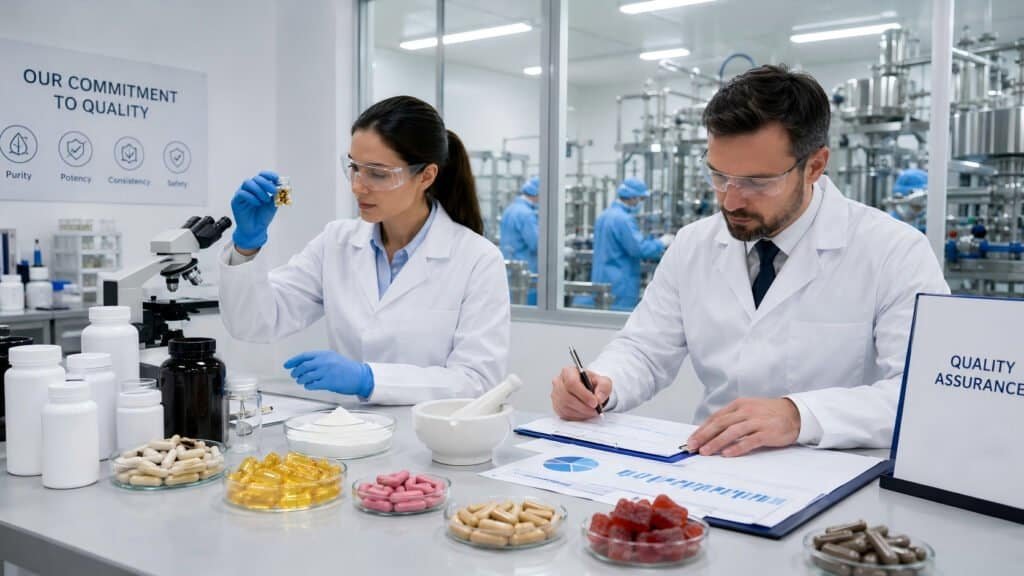
How to Choose a Dietary Supplement OEM Manufacturer
Before contacting a dietary supplement OEM manufacturer, clearly define the type of product you want to develop.
Your initial product brief should include:
- Product category
- Dosage form
- Key active ingredients
- Intended serving size
- Target consumer
- Target sales market
- Preferred packaging format
- Estimated first-order quantity
- Desired product claims
- Dietary and allergen requirements
- Whether you need a stock formula or a custom formula
Common dosage forms include:
- Gummies
- Capsules
- Tablets
- Softgels
- Powders
- Liquid drops
- Sachets
- Effervescent tablets
You should also specify whether the product needs to be vegan, sugar-free, non-GMO, gluten-free, halal, kosher, organic, allergen-free, or made without artificial colors and flavors.
The more detailed your product brief is, the more accurate the dietary supplement OEM manufacturer’s quotation, minimum order quantity, formulation proposal, and production timeline will be.
Brands that are still in the concept stage can provide information about their target audience, desired benefits, retail price, and preferred dosage form. An experienced dietary supplement OEM manufacturer should then be able to recommend a practical product direction.
What Does a Dietary Supplement OEM Manufacturer Do?
A dietary supplement OEM manufacturer produces finished supplements to your exact specification, using your formula, your brand name, and your packaging. The manufacturer is responsible for sourcing ingredients, blending, filling, encapsulation or tableting, labeling, and final quality testing.
The scope of work can vary widely. Some dietary supplement OEM manufacturer facilities focus on a single dosage form, such as capsules or gummies, while others operate multi-format production lines covering tablets, softgels, powders, and liquids.
Beyond production, a full-service dietary supplement OEM manufacturer also supports formulation refinement, stability testing, regulatory documentation, packaging sourcing, and export logistics. Understanding exactly which services are included helps you compare quotations accurately.
Before you sign anything, ask each dietary supplement OEM manufacturer candidate to document its core capabilities in writing. The answer will tell you whether the facility can support your product today and scale with your brand tomorrow.
2. Check the Manufacturer’s Regulatory and Quality Credentials
Regulatory readiness should be one of the first criteria used to evaluate a dietary supplement OEM manufacturer.
For products intended for the United States, the dietary supplement OEM manufacturer should understand the current Good Manufacturing Practice requirements applicable to dietary supplements under 21 CFR Part 111.
For products intended for European markets, the dietary supplement OEM manufacturer should be familiar with relevant food supplement regulations, permitted ingredients, labeling requirements, health claims, allergen declarations, and country-specific notification procedures.
Depending on the product and target market, useful certifications and quality systems may include:
- cGMP-NSF or cGMP
- HACCP
- ISO 22000
- FSSC 22000
- BRCGS
- NSF certification
- Halal certification
- Kosher certification
- Organic certification
Ask the dietary supplement OEM manufacturer to provide:
- Current certificates
- Certificate numbers
- Expiration dates
- Names of the certification bodies
- The exact manufacturing address covered
- The dosage forms included in the certification scope
- Recent audit reports, where available
Certificates should always be verified. A certificate belonging to a different company, production site, or dosage form may not apply to your product.
It is also important to understand that an FDA-registered facility is not the same as an FDA-approved or FDA-certified dietary supplement OEM manufacturer. FDA registration does not represent approval or endorsement of a facility or its products.
Be cautious of suppliers that use phrases such as “FDA-approved supplements”or “FDA-certified products”without a legally valid basis.
Certifications a Dietary Supplement OEM Manufacturer Should Hold
Certifications are the fastest way to verify that a dietary supplement OEM manufacturer can produce compliant products for your target market. The exact documents depend on your destination country, but the following credentials matter in most markets.
- cGMP certification for dietary supplements
- FDA registration for facilities exporting to the United States
- HACCP or ISO 22000 food safety certification
- ISO 9001 quality management certification
- Halal and kosher certifications where required
- Organic certification for certified organic products
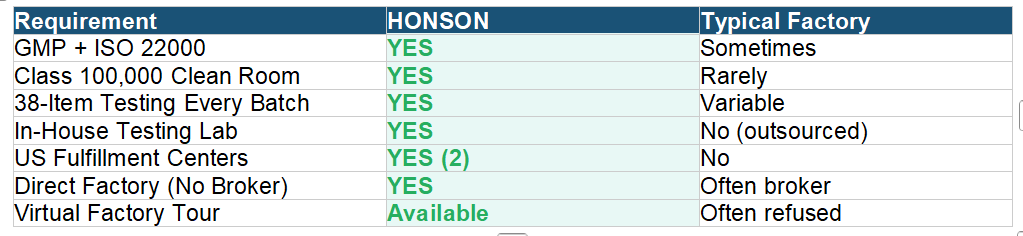
Request copies of current certificates and verify them directly with the issuing body when possible. A reputable dietary supplement OEM manufacturer will share these documents without hesitation, while a vague or evasive response is a clear warning sign.
For guidance on product compliance, consult official sources such as the U.S. Food and Drug Administration (FDA dietary supplements) and the National Institutes of Health (NIH Office of Dietary Supplements). These organizations publish authoritative information on labeling, current good manufacturing practices, and ingredient safety.
3. Confirm Whether the Supplier Is the Actual Manufacturer
Some supplement suppliers are trading companies, sourcing agents, or project management businesses rather than direct manufacturers.
Working with an intermediary is not always a problem. However, you should know exactly where your products will be produced and which company will be responsible for quality control.
Ask for:
- The legal name of the manufacturing company
- The physical factory address
- Production facility photographs
- A live video factory tour
- A list of major production equipment
- Laboratory information
- Warehouse information
- Production capacity
- Quality control procedures
You should also confirm that the factory has genuine experience with your selected dosage form.
A dietary supplement OEM manufacturer that is highly experienced in hard capsules may not be equally capable of producing stable gummies. A powder manufacturer may not have the equipment or technical expertise required for softgels or liquid drops.
Different dosage forms require different manufacturing technologies, stability controls, packaging systems, and testing procedures.
4. Evaluate Formulation and Product Development Capabilities
A strong dietary supplement OEM manufacturer partner should do more than combine ingredients from a list. The technical team should be able to determine whether your formula is safe, stable, manufacturable, and commercially realistic.
Ask the following questions:
- Does the dietary supplement OEM manufacturer have an in-house research and development team?
- Can the formula be adapted for different markets?
- Can the team review ingredient compatibility?
- Can they recommend appropriate ingredient dosages?
- Can they improve taste, texture, color, and solubility?
- Can they support both stock and custom formulations?
- How many sample revisions are included?
- Who owns the final formula?
- Will the dietary supplement OEM manufacturer sign a confidentiality agreement?
- Can the formula be used for other customers?
For gummies, the dietary supplement OEM manufacturer should understand issues such as heat-sensitive ingredients, moisture, pH, texture, coating, flavor masking, and product sticking.
For powders, important considerations include solubility, flavor, particle size, flowability, clumping, density, and scoop accuracy.
For capsules and tablets, the dietary supplement OEM manufacturer should evaluate capsule size, tablet hardness, disintegration, ingredient density, and the practical amount that can fit into each serving.
If your formula is a key competitive advantage, ownership and confidentiality terms should be clearly documented before development begins.
How to Shortlist Dietary Supplement OEM Manufacturers
Start with a long list of candidates, then narrow it down using objective criteria rather than marketing materials or website design.
A practical shortlisting process for a dietary supplement OEM manufacturer includes:
- Verifying the facility’s certifications and registration status
- Confirming that the dosage forms you need are produced in-house
- Reviewing product samples from three or more candidates
- Checking references from brands in your category
- Comparing minimum order quantities and unit pricing transparently
- Evaluating response quality and the technical depth of the sales team
Every dietary supplement OEM manufacturer will say it offers good quality. A structured shortlist based on documents, samples, and references will separate claims from evidence.
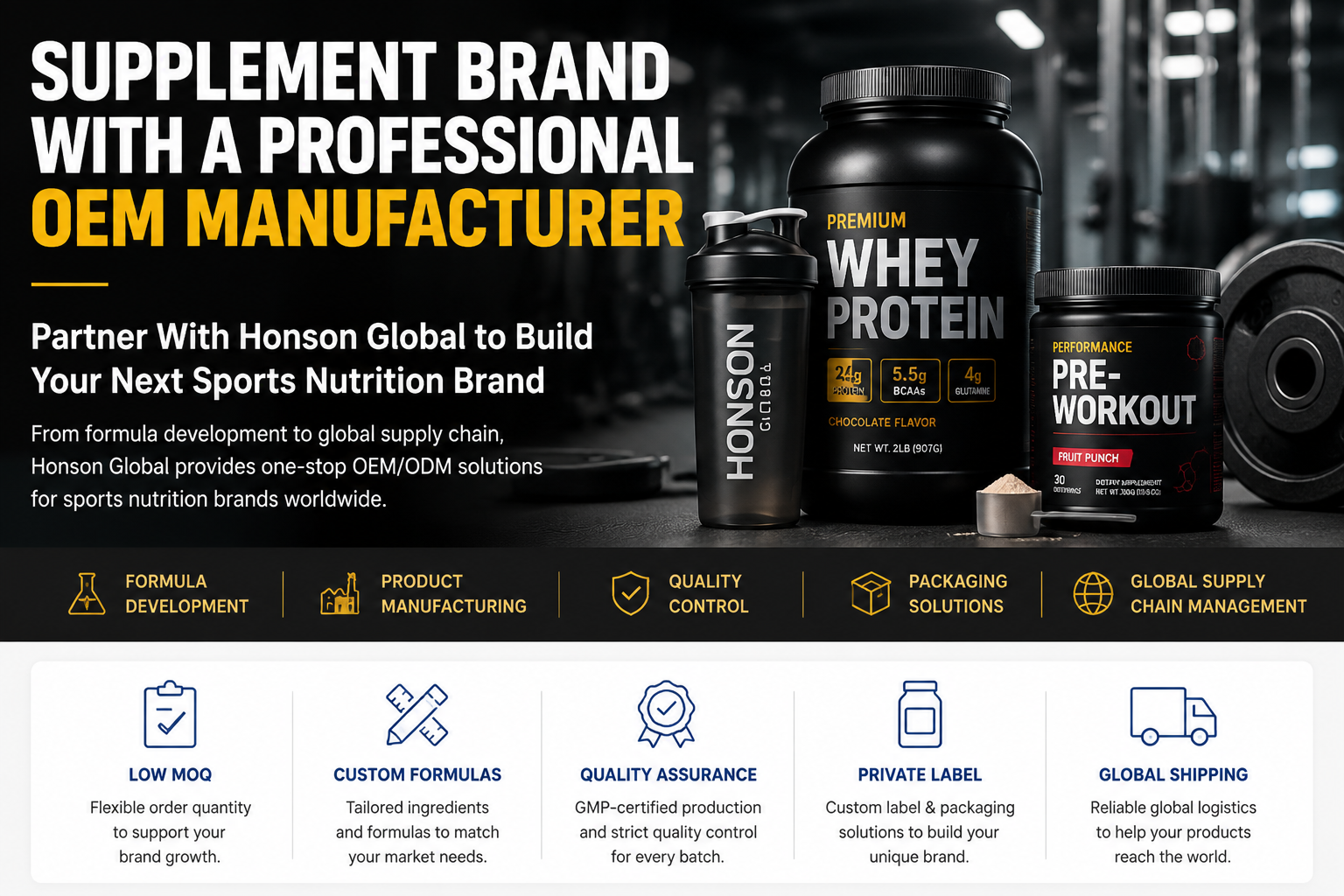
If you are launching a sports nutrition line, our guide to working with a professional OEM manufacturer for sports supplement brands walks through the same evaluation process applied to that category.
5. Review Ingredient Sourcing and Traceability
Finished product quality depends heavily on the quality of the raw materials.
Do not accept general statements such as “we only use premium ingredients.”Ask how the dietary supplement OEM manufacturer qualifies suppliers, verifies incoming materials, and maintains traceability.
Important questions include:
- Are ingredient suppliers formally approved?
- Is a Certificate of Analysis available for every batch?
- Are incoming ingredients tested for identity?
- Can each material be traced to its supplier and batch?
- Can you specify the ingredient origin?
- Can the dietary supplement OEM manufacturer source branded or patented ingredients?
- How are allergens controlled?
- How is cross-contamination prevented?
- Will you be informed before an ingredient supplier changes?
- Are raw material and finished product retention samples kept?
For premium products, request detailed specifications for key ingredients, including:
- Botanical species
- Plant part used
- Extract ratio
- Standardized active content
- Purity
- Country of origin
- Trademarked ingredient status
- Carrier materials
- Allergen information
This helps prevent situations in which the commercial batch is produced with a different ingredient grade from the approved sample.
6. Understand the Complete Quality Control Process
Quality control should cover every stage of manufacturing, not only the final product.
Ask the dietary supplement OEM manufacturer to explain its procedures for:
- Supplier approval
- Raw material receiving
- Ingredient identity testing
- Quarantine and release
- Weighing and dispensing
- Batch record control
- In-process inspections
- Packaging verification
- Label reconciliation
- Finished product testing
- Quality assurance release
- Retention samples
- Complaint management
- Product recall procedures
Testing requirements will depend on the product, ingredients, dosage form, and destination market.
Common tests may include:
- Microbiological testing
- Heavy metal testing
- Active ingredient testing
- Identity testing
- Moisture testing
- Pesticide residue testing
- Residual solvent testing
- Disintegration testing
- Dissolution testing
- Weight variation
- Stability testing
- Packaging integrity testing
Clarify which tests are included in the quotation and which tests require additional payment.
You should also confirm whether testing is completed in the dietary supplement OEM manufacturer’s internal laboratory or by an independent accredited laboratory.
Ask whether a batch-specific Certificate of Analysis can be supplied with every production order.
7. Never Skip Sampling and Pilot Production
Product photographs and formula sheets are not enough to approve commercial production.
Samples allow you to assess:
- Taste
- Aroma
- Color
- Appearance
- Texture
- Capsule size
- Tablet size
- Powder solubility
- Sweetness
- Aftertaste
- Gummy elasticity
- Liquid sedimentation
- Packaging quality
- Label appearance
For custom products, confirm that the approved sample and the commercial batch will use the same ingredient specifications and manufacturing process.
Once a sample is approved, document the final product specifications in writing.
The approval should include:
- Formula version
- Ingredient list
- Active ingredient levels
- Flavor
- Color
- Dosage form
- Unit weight
- Serving size
- Quantity per container
- Packaging format
- Label version
- Shelf-life requirements
This approved specification can become the reference standard for commercial production.
For technically complex formulations or large orders, a pilot production batch may be appropriate before full-scale manufacturing.
8. Evaluate the Minimum Order Quantity Carefully
Minimum order quantity is often a major concern for startup and growing supplement brands.
However, the lowest MOQ is not always the best option.
An unusually low MOQ may mean:
- Only stock formulas are available
- Packaging options are limited
- Unit costs are higher
- Customization is restricted
- Production is outsourced
- Testing is not included
- The product shares a production run with other customers
Ask for separate MOQ information for:
- Stock formulas
- Custom formulas
- Each flavor
- Each color
- Each bottle size
- Printed labels
- Custom boxes
- Sachets
- Custom molds
- Repeat orders
Packaging materials often have a different MOQ from the finished product. For example, a factory may accept a relatively small production order, while a custom bottle, printed pouch, or folding carton supplier may require a much larger quantity.
For market testing, startup brands can reduce risk by selecting:
- A proven stock formula
- Standard bottle sizes
- Pressure-sensitive labels
- Standard caps
- Simple outer cartons
- Limited flavor options
After demand has been validated, the brand can invest in a custom formula and more distinctive packaging.
9. Request a Transparent and Detailed Quotation
Do not compare suppliers based only on the quoted price per bottle.
A professional quotation should clearly explain what is included.
Potential cost items include:
- Raw materials
- Formulation work
- Manufacturing
- Bottles or pouches
- Caps and closures
- Induction seals
- Desiccants
- Labels
- Folding cartons
- Shipping cartons
- Scoops
- Sachets
- Molds
- Sample production
- Laboratory testing
- Stability testing
- Design services
- Freight
- Customs documentation
- Storage
- Palletization
Ask whether there are additional charges for:
- Formula revisions
- Flavor changes
- Custom colors
- Small production runs
- Label revisions
- Urgent production
- Warehousing
- Third-party inspections
- Export documentation
The quotation should also state:
- Payment terms
- Quotation validity
- Production lead time
- Shipping terms
- Incoterms
- Currency
- Tax treatment
- Quality responsibility
- Reproduction or replacement conditions
A quotation that appears significantly cheaper than competing offers may exclude essential testing, packaging, or quality services.
When you compare quotations, ask each dietary supplement OEM manufacturer to price the same specification: same formula, same dosage form, same bottle, same label, same carton, same testing scope. Only then are the numbers truly comparable.
10. Verify Production Capacity and Lead Times
A dietary supplement OEM manufacturer may be willing to accept your order but still lack the capacity to deliver it on schedule.
Ask about:
- Sample development time
- Formula approval time
- Raw material purchasing time
- Packaging procurement time
- Production lead time
- Laboratory testing time
- Peak-season delays
- Monthly production capacity
- Emergency reorder options
- Typical repeat-order lead time
Your production timeline should also allow time for:
- Formula revisions
- Label compliance review
- Packaging approval
- Stability evaluation
- Quality testing
- Freight
- Customs clearance
- Warehouse receiving
This is especially important when products are being launched for a specific campaign, retail promotion, trade show, crowdfunding project, or seasonal sales period.
Consistent delivery performance is often more valuable than the lowest production price. Stockouts can damage advertising performance, marketplace rankings, retail relationships, and customer retention.
11. Assess Packaging and Labeling Support
Packaging is not only a branding decision. It also affects product stability, shelf life, regulatory compliance, shipping costs, and consumer experience.
A capable dietary supplement OEM manufacturer should be able to support:
- Bottle selection
- Pouch selection
- Closure selection
- Induction seals
- Tamper-evident packaging
- Moisture protection
- Light protection
- Label templates
- Carton dimensions
- Batch coding
- Expiration date printing
- Barcode placement
- Shipping carton design
The dietary supplement OEM manufacturer may also provide guidance on:
- Supplement Facts panels
- Nutrition declarations
- Ingredient lists
- Allergen statements
- Directions for use
- Warning statements
- Storage instructions
- Country-of-origin statements
- Mandatory business information
However, factory label reviews should not be treated as a substitute for independent regulatory or legal review.
The brand owner, importer, or responsible business operator may remain legally responsible for the finished product, claims, advertising, and label information.
Before printing packaging in commercial quantities, obtain final written approval from all relevant parties.
12. Review Communication and Project Management
Supplement manufacturing projects often take several weeks or months. Communication quality can have a significant impact on cost, timing, and product accuracy.
During the early stages, consider whether the supplier:
- Responds clearly and promptly
- Answers technical questions accurately
- Identifies potential problems early
- Provides realistic timelines
- Confirms important decisions in writing
- Assigns a dedicated project manager
- Keeps product documents organized
- Communicates delays immediately
- Offers practical solutions
Be cautious when a supplier responds quickly before receiving payment but becomes difficult to contact after the deposit has been paid.
A reliable manufacturing partner should remain responsive throughout formulation, sampling, packaging, production, testing, shipping, and repeat orders.
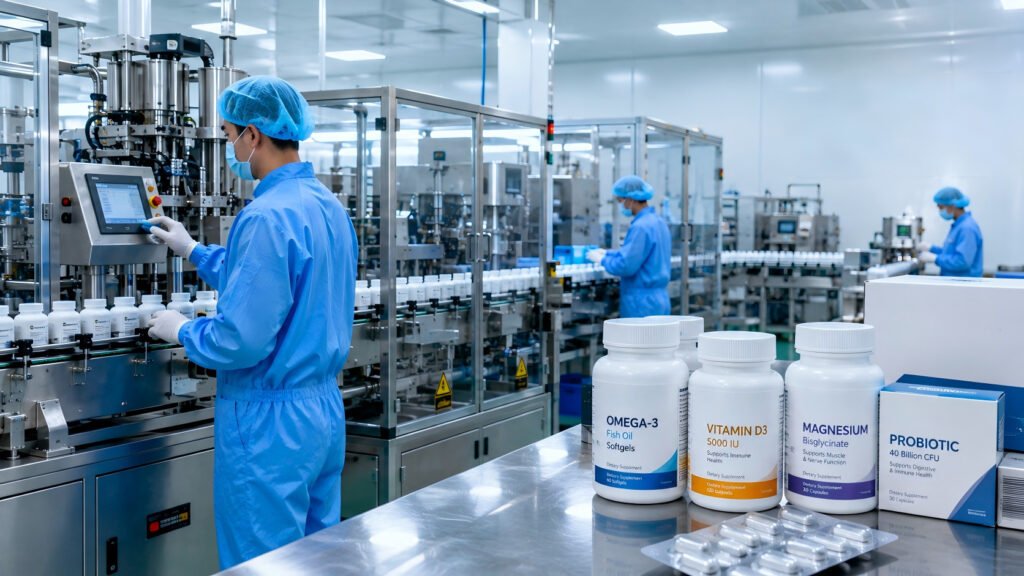
Common Mistakes When Choosing a Dietary Supplement OEM Manufacturer
Most sourcing problems are caused by a small number of repeatable mistakes. Avoid these when you evaluate any dietary supplement OEM manufacturer:
- Choosing the cheapest quote without checking what is excluded
- Skipping a factory audit or independent inspection
- Relying on a single sample produced under special conditions
- Ignoring the total landed cost, including testing, freight, and duties
- Signing a purchase order before the label and formula are final
- Failing to document agreed specifications and quality standards
Mistakes are expensive because they compound. A labeling error discovered after production can delay your launch by months and consume the margin of an entire first batch.
The same discipline applies to compliance. Our article on supplement compliance mistakes to avoid explains the regulatory errors that most often hurt new supplement brands.
Warning Signs When Choosing a Dietary Supplement OEM Manufacturer
The following warning signs should be investigated carefully:
- The supplier refuses to provide a factory address
- Live video inspections are not permitted
- Certificates cannot be verified
- Certificate company names do not match the supplier
- The production site is not covered by the certificates
- The supplier claims that supplements are FDA approved
- Batch testing documents are unavailable
- Ingredient sources cannot be explained
- The quotation is far below normal market levels
- Sample and production specifications are not documented
- The supplier requests full payment before production
- Quality standards are missing from the contract
- Delivery dates are not clearly stated
- The dietary supplement OEM manufacturer guarantees medical results
- It is unclear where the product will actually be manufactured
One warning sign does not always mean a supplier is unsuitable. However, multiple unresolved issues can indicate a high-risk manufacturing relationship.
Questions to Ask a Dietary Supplement OEM Manufacturer
Use the following checklist when contacting potential suppliers:
- Do you manufacture this dosage form in your own facility?
- Which certifications does your facility currently hold?
- Do you have experience exporting to my target market?
- What are your MOQs for stock and custom formulas?
- What is the sample fee?
- How long does sample development take?
- Which formula elements can be customized?
- What is included in the quotation?
- Which product tests are included?
- Can you provide a batch-specific Certificate of Analysis?
- Who owns the final formula?
- Will you sign a confidentiality agreement?
- What is the commercial production lead time?
- Can you support packaging and label development?
- How do you handle products that fail specifications?
- What are the payment terms?
- What documentation is supplied with each shipment?
- What is the process for repeat orders?
Sending the same questionnaire to several suppliers makes it easier to compare their capabilities objectively.
OEM, ODM, Private Label, and Contract Manufacturing: What Is the Difference?
These terms are sometimes used differently by different suppliers.
OEM Manufacturing
OEM generally means that the dietary supplement OEM manufacturer produces a product according to the brand owner’s formula, specifications, or requirements.
ODM Manufacturing
ODM typically includes product development services, such as formulation, dosage-form selection, flavor development, and packaging recommendations.
Private Label Manufacturing
Private label manufacturing usually involves selecting an existing or stock formula and applying the customer’s brand name and packaging.
Contract Manufacturing
Contract manufacturing is a broader term covering outsourced production based on agreed product specifications.
Do not rely only on the service name. Ask the supplier to explain exactly what is included in its formula development, testing, packaging, and regulatory support.
Should You Choose the Lowest-Priced Manufacturer?
Price is important, but it should not be the only selection criterion.
A low quotation may result from differences in:
- Ingredient grade
- Active ingredient dosage
- Ingredient source
- Testing scope
- Packaging quality
- Quality control
- Production location
- Customer support
- Payment terms
- Delivery time
A dietary supplement OEM manufacturer offering a slightly higher price may provide better testing, more reliable ingredients, clearer documentation, faster communication, and fewer production problems.
The true cost of manufacturing includes the risk of product complaints, rejected shipments, recalls, delayed launches, and damage to your brand reputation.
Is a Factory Audit Necessary?
For large orders or long-term manufacturing relationships, an on-site audit is highly recommended.
When an on-site visit is not possible, request a live video audit covering:
- Raw material warehouse
- Quarantine areas
- Production rooms
- Packaging lines
- Finished goods warehouse
- Quality control laboratory
- Cleaning procedures
- Batch records
- Employee hygiene controls
A video audit cannot fully replace an independent on-site inspection, but it can help identify obvious capability or transparency issues.
Third-party factory inspections can also be arranged before placing a major order.
Should a Startup Brand Use a Custom Formula?
The right choice depends on the brand’s budget, positioning, timeline, and sales strategy.
A stock formula generally offers:
- Lower development costs
- Faster sampling
- Lower MOQ
- Shorter lead times
- Reduced technical risk
A custom formula may offer:
- Stronger differentiation
- More control over ingredient dosages
- Unique product positioning
- Better alignment with a specific audience
- Greater long-term brand value
For many startup brands, a practical approach is to launch with a proven stock or semi-custom formula, validate demand, and develop a fully custom formula after generating customer feedback and repeat sales.
Final Thoughts: Choose a Long-Term Manufacturing Partner
Choosing a dietary supplement OEM manufacturer should not be based only on an attractive sample or a low unit price.
A reliable manufacturing partner should offer:
- Transparent production processes
- Verifiable certifications
- Strong quality control
- Complete batch documentation
- Reliable ingredient sourcing
- Realistic lead times
- Suitable formulation capabilities
- Responsive project management
- Clear commercial terms
Before making a final decision, complete the following steps:
- Verify the legal company and production site
- Review current certificates
- Inspect the factory
- Approve physical samples
- Review testing documents
- Compare complete quotations
- Confirm formula ownership
- Approve final product specifications
- Define quality standards
- Confirm production and delivery schedules
- Include responsibilities in a written contract
A careful supplier evaluation process can reduce risk, improve product consistency, and create a stronger foundation for long-term brand growth.
Develop Your Supplement Brand with Honson Global
Honson Global provides OEM, ODM, private label, and contract manufacturing services for a wide range of dietary and food supplement products.
Available dosage forms include:
- Gummies
- Capsules
- Tablets
- Softgels
- Powders
- Liquid supplements
Our team can support brands with formulation, flavor development, ingredient sourcing, sampling, packaging, label preparation, production, testing, and export coordination.
To discuss your project, provide the following information:
- Product category
- Target market
- Preferred dosage form
- Key ingredients
- Packaging requirements
- Estimated order quantity
Based on your requirements, the Honson Global team can recommend an appropriate formula, sample plan, minimum order quantity, packaging option, and production solution.
Contact Honson Global to start developing your private label supplement product.
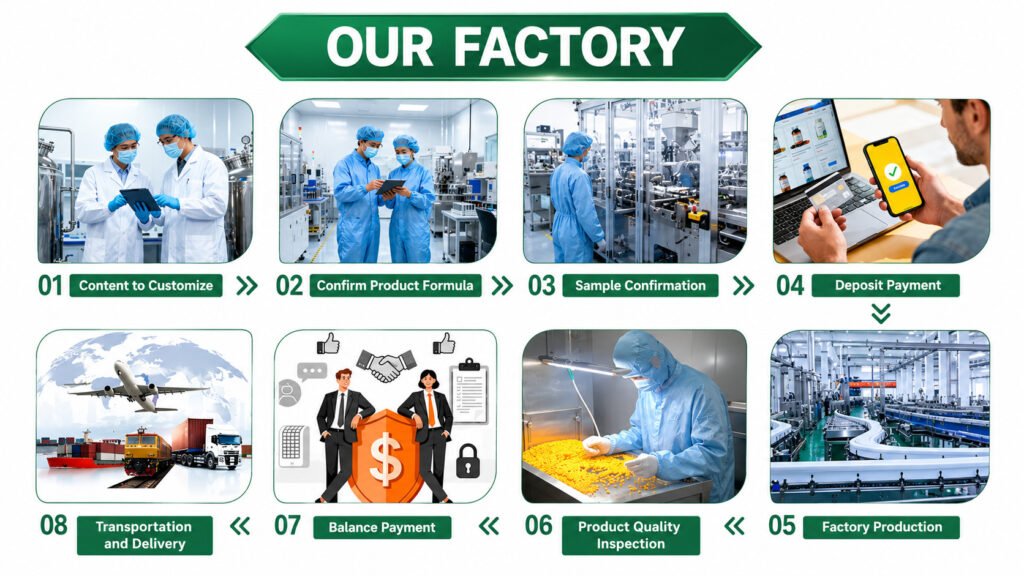
To get started, request a quote and include your product concept, target market, dosage form, and estimated order quantity. You can also review our OEM and ODM dietary supplement services and see how our process works before you reach out.
Email Address:sales@honsonglobal.com
WhatsApp:+1 (725)303–309
WeChat: 17253037309